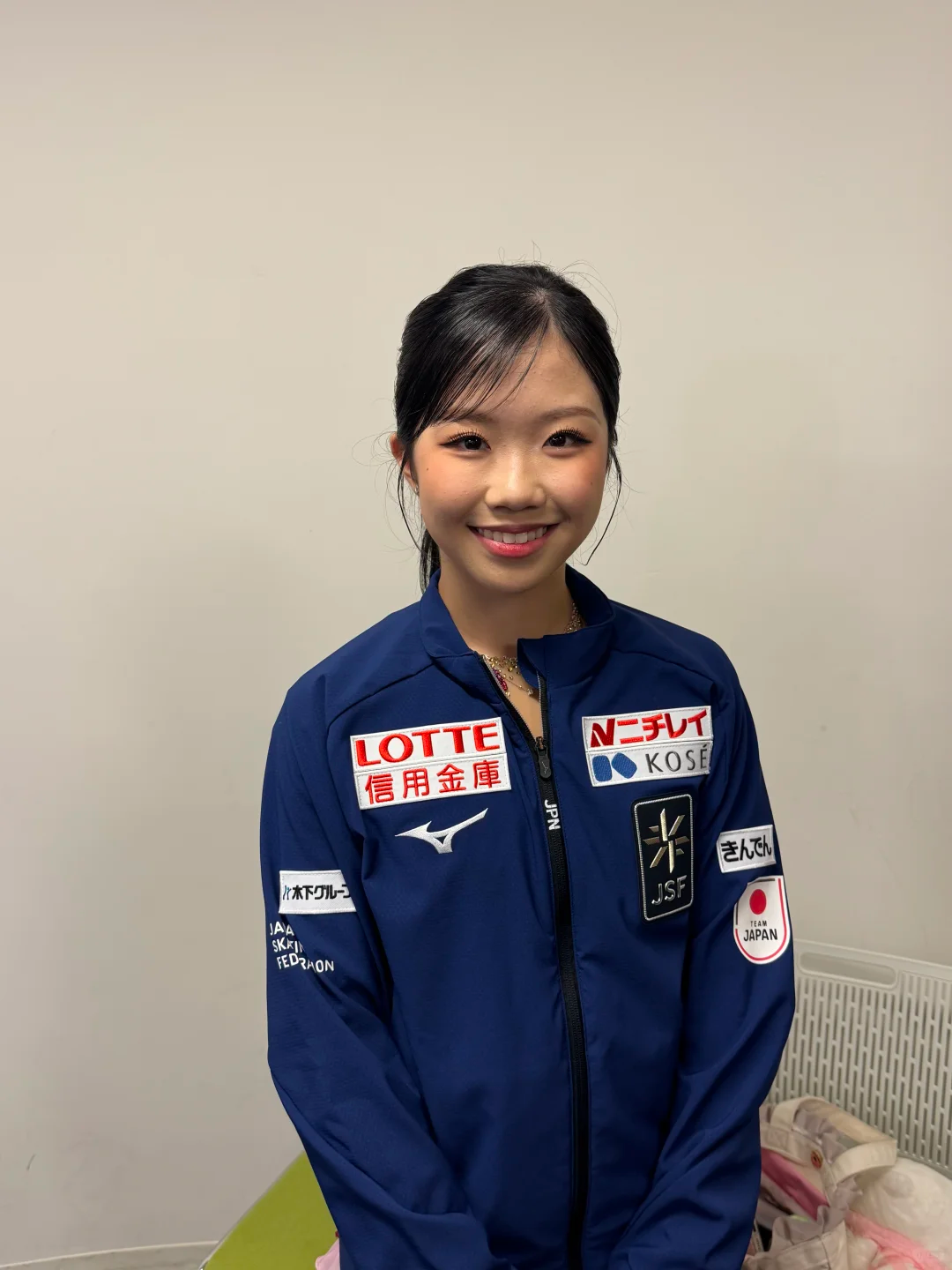
新赛季首战:把观众的支持变成力量
相比一些重要比赛前的紧张感,这一次Ami并没有感到过度紧张。节目开始阶段,她的注意力更多放在技术与动作衔接上;进入后半段后,她逐渐释放出更完整的表现力。
作为新赛季的第一场比赛,现场观众数量一度让她感到惊讶。但随着比赛推进,来自看台的支持逐渐转化成一种自然的推动力,也让她在冰面上变得更加自信。
这场短节目让她再次意识到,保持自信和集中注意力非常重要,而她也希望把这样的状态延续到之后的比赛。
突破80分:惊喜之外,更关注动作质量
短节目得分超过80分让Ami感到惊喜。她认为,新规则下基础分的变化以及自己动作完成质量的提升,都可能是成绩提高的重要原因。
与此同时,她也在观察其他选手的技术特点。看到包括俄罗斯选手在内的一些运动员完成阿克塞尔三周跳时所呈现出的轻盈感,也让她希望继续调整自己的跳跃技术,追求更高质量的动作和滑行。
发饰意外松动:比赛中的专注力考验
节目进行过程中,Ami遇到了一次意外状况:发饰出现松动。由于固定使用了较多发针,她无法在第一时间自行处理,这让她短暂分心。
离开冰面后,在工作人员协助下问题得到处理,她也迅速重新调整注意力。这次小插曲让她更加直观地体会到,在比赛中控制注意力的重要性。
最终,现场观众的欢呼帮助她重新建立自信,她也完成了一套令自己满意的节目。
奥运会之后:从疲劳与自我怀疑中重新出发
奥运会结束后,Ami经历了一段恢复期。疲劳使赛季准备初期的训练推进得并不快,也一度让她产生自我怀疑。
通过与教练沟通,她逐渐接受了“不必急于求成”的节奏,并相信竞技状态会随着训练逐步恢复。这样的心态调整帮助她摆脱负面情绪,也让后续备战变得更加高效。
面对新赛季赛场环境和规则层面的变化,她在正式比赛初期虽然有过一些不安,但最终适应情况良好。
面对竞争:首先做好自己的比赛
对于短节目拿到80分以上的成绩,Ami感到意外而开心,也把它视为对训练成果的一种积极反馈。不过现阶段,她仍然更关注自己的发挥,而不是单纯把注意力放在排名上。
与岛田再次同场:熟悉的竞争带来动力
回忆青年组时期,Ami认为与岛田选手之间的竞争曾经是推动自己进步的重要动力。如今进入成年组后再次同场竞技,她对此感到高兴,也从这种熟悉的竞争关系中获得新的动力。
谈Trusova:与从小关注的选手同场是一种荣幸
对于产后重新回到赛场的Alexandra Trusova,Ami关注到了她复出过程中展现出的韧性和节目完成度。能够与自己从小就关注的运动员出现在同一片赛场,对她而言也是一次特别的经历。
日本国内竞争:强手云集也是成长环境
谈到日本女子单人滑内部的竞争,Ami并不把高水平竞争单纯看作压力。她认为,身处高手众多的环境能够持续激发自己的斗志,也是推动运动员成长的良好条件。
对她而言,新赛季的关键词仍然是自信、专注,以及把自己的节目做到最好。
English Translation
Translated from the Chinese article published by MS Sport Media.
The season opener: turning the audience’s support into strength
Unlike the nerves she has felt before some major competitions, Ami did not feel excessively nervous this time. Early in the program, she focused more on technique and transitions; in the second half, she gradually brought out a fuller performance.
At her first competition of the new season, she was initially surprised by the size of the crowd. As the competition progressed, however, the support from the stands became a natural source of momentum and helped her feel more confident on the ice.
This short program reminded her of the importance of confidence and concentration, and she hopes to carry that mindset into the competitions ahead.
Passing 80 points: a surprise, with the focus still on quality
Ami was pleasantly surprised to score more than 80 points in the short program. She felt that changes to base values under the new rules, together with improvements in the quality of her elements, may have contributed to the higher score.
She is also observing other skaters’ technical qualities. The lightness she sees in some athletes’ triple Axels, including those of Russian skaters, inspires her to keep refining her own jumping technique and pursue higher-quality elements and skating.
A loose hair accessory: a test of concentration
During the program, Ami encountered an unexpected problem when her hair accessory came loose. Because it had been secured with numerous hairpins, she could not immediately fix it herself, and it briefly distracted her.
After she left the ice, staff helped resolve the problem, and she quickly refocused. The incident gave her a more direct understanding of how important it is to manage her attention in competition.
Ultimately, the audience’s cheers helped restore her confidence, and she delivered a program she was happy with.
After the Olympics: moving beyond fatigue and self-doubt
Following the Olympics, Ami went through a period of recovery. Fatigue slowed her progress at the beginning of her preparations for the season and, for a time, caused her to doubt herself.
Through conversations with her coach, she gradually accepted that she did not need to rush and trusted that her competitive form would return with training. This change in mindset helped her move beyond negative emotions and made her subsequent preparations more effective.
Although changes in the competitive environment and rules caused some uncertainty at the start of the season’s competitions, she ultimately adapted well.
Facing competition: doing her own job first
Ami was surprised and happy to exceed 80 points in the short program, seeing it as positive feedback on her training. At this stage, though, she is more concerned with her own performance than with focusing solely on placement.
Competing alongside Shimada again: motivation from a familiar rivalry
Looking back on her junior years, Ami felt that her rivalry with Shimada had been an important force in her development. She is happy to compete alongside her again at senior level and draws fresh motivation from that familiar rivalry.
On Trusova: the privilege of sharing the ice with someone she followed growing up
Ami has noticed the resilience and quality of performance Alexandra Trusova has shown in returning to competition after childbirth. Sharing a competition with an athlete she has followed since childhood is a special experience for her.
Competition in Japan: a strong field as an environment for growth
Ami does not see the intense competition in Japanese women’s singles simply as pressure. She believes that being surrounded by strong skaters continually fuels her competitive spirit and provides a good environment for athletes to develop.
For her, the new season remains about confidence, concentration and performing her own programs as well as she can.