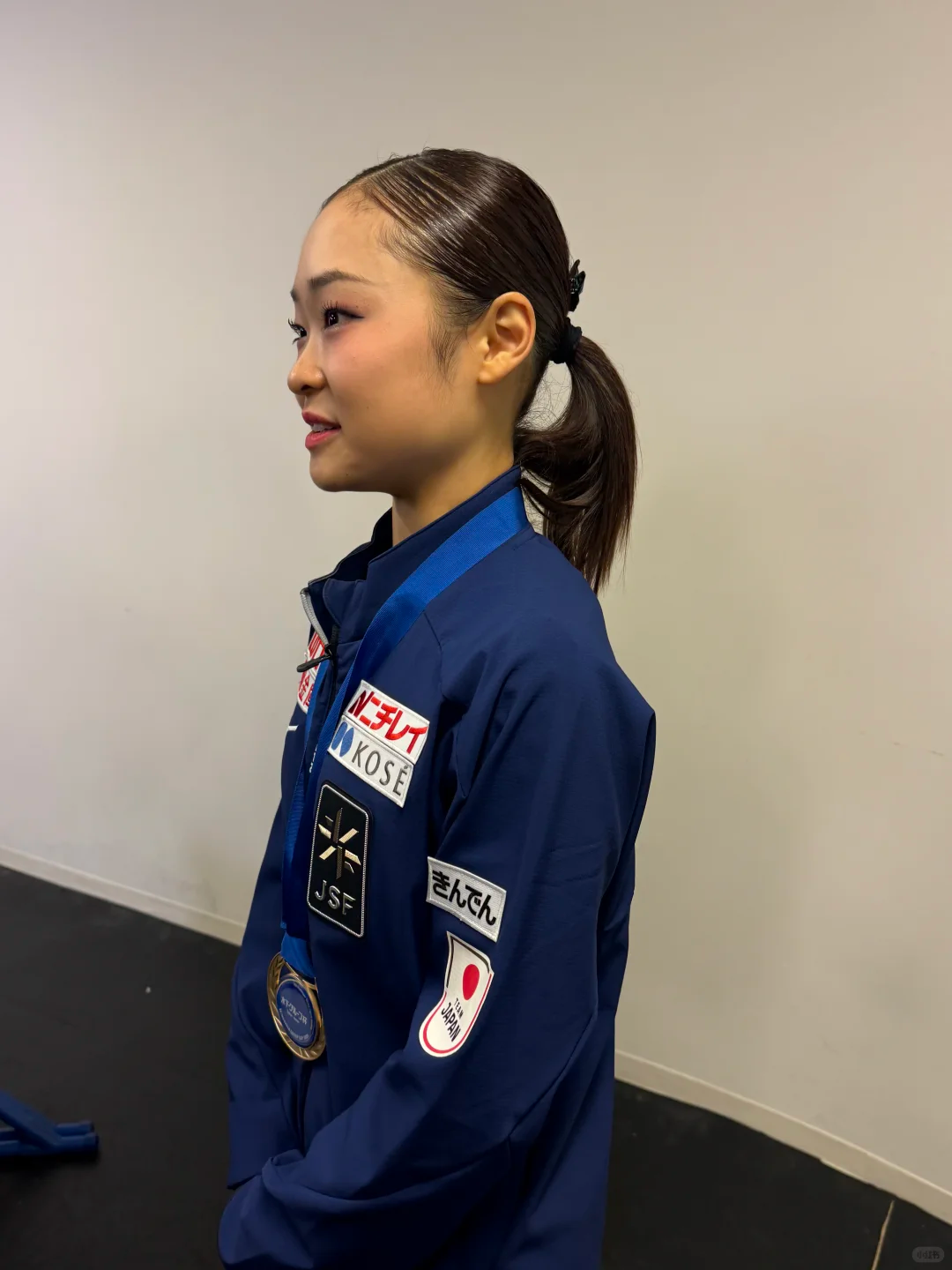
专注自己的比赛,没有被外界表现打乱节奏
赛前,现场已经被其他选手的出色发挥充分调动起来。不过岛田选手表示,自己当时并不知道伊格纳托娃完成了四个四周跳,因此没有因此增加额外的心理负担。
某种程度上,这让她能够把注意力完全留在自己的滑行和节目上,而不是被对手已经完成的内容牵动,最终也帮助她完成了理想的比赛。
自由滑3A:起跳时就感觉“可以落下来”
短节目中的三周半跳曾因旋转不足受到影响,但到了自由滑,她在进入场馆后感受到很好的竞技状态,也建立起更充分的自信。
在三周半真正起跳的一瞬间,她已经对这次跳跃有了更积极的判断,最终顺利完成动作。对她而言,这不仅是一次技术上的成功,也是这场比赛中非常重要的信心来源。
改变用刃方式,让三周半的轴心更加稳定
近期训练中,她对三周半跳进行了一些细微调整。过去起跳时用刃幅度相对较大,现在则尝试采用更小、更深的用刃方式。
反复训练后,这种调整帮助她改善了过去“高度足够、但轴心容易不稳定”的问题,也让空中轴心控制和动作成功率逐渐提升。
4T:曾想过放弃,但舍不得多年的投入
四周后外点冰跳的训练并不是一路顺利。在青年组时期,这个动作对身体和心理状态要求都非常高,往往需要接近最佳状态才能完成。
面对比赛中失误可能带来的成绩风险,她也曾产生过是否应该放弃这个动作的想法。但从小学六年级到初中一年级,她已经为这一跳投入了大量时间和精力。正是这种长期积累形成的情感和执着,让她最终选择继续坚持。
竞争让四周跳从“附加题”变成“必答题”
随着俄罗斯高难度选手进入竞争环境,四周跳在她竞技规划中的意义也发生了变化。过去它更像是额外增加竞争力的技术内容,而面对更高难度的对手之后,它逐渐成为想要保持竞争力必须认真面对的任务。
这种压力并非只有负面作用。相反,更高水平的竞争也推动她进一步挖掘自己的技术潜力。
4Lz仍在尝试,回国后继续强化四周跳
四周卢茨跳并不是今年才开始接触的动作。她从中学生时期就曾借助外力辅助进行练习,不过过去独立完成的训练相对有限。
今年,她增加了自主练习的频率,但受到脚部状况等因素影响,赛前没有进行大量实战式尝试。
接下来回国后,她计划继续恢复并强化四周跳的系统训练,同时进一步巩固三周半跳经过调整后的起跳技术,让高难度动作能够在国际比赛中更加稳定地输出。
这枚成年组起点上的金牌,更像是一个新阶段的开始:稳定已经拥有的武器,同时继续向更高难度推进。
English Translation
Translated from the Chinese article published by MS Sport Media.
Staying focused on her own competition
Before she skated, the arena was already energized by strong performances from other competitors. Shimada said, however, that she had not known Ignatova had landed four quadruple jumps, so this did not add to the pressure she felt.
In a way, that allowed her to keep her attention on her own skating and program rather than on what her rivals had already done, helping her deliver the performance she wanted.
The free skate triple Axel: confidence from the moment of take-off
Her triple Axel in the short program had been affected by under-rotation. For the free skate, however, she felt in good competitive form after arriving at the venue and built greater confidence.
The moment she took off for the triple Axel, she already felt more positive about the jump, which she went on to land successfully. It was both a technical achievement and an important source of confidence in this competition.
Adjusting the edge to stabilize the triple Axel’s axis
She has recently made small adjustments to her triple Axel in training. Previously, her edge action at take-off was relatively large; she is now trying to use a smaller, deeper edge.
Through repeated practice, this adjustment has helped address a problem in which she had enough height but an unstable axis. Her control in the air and consistency have gradually improved.
The quad toe loop: thoughts of giving up, and years of work she could not leave behind
Training the quad toe loop has not been straightforward. During her junior years, the jump demanded a great deal physically and mentally, often requiring her to be close to her best condition to execute it.
Aware of the scoring risks if the jump went wrong in competition, she considered whether to abandon it. But she had already devoted considerable time and effort to it from her final year of primary school into her first year of junior high. That long investment, and the attachment and determination it created, ultimately led her to keep going.
Competition turns a quad from an extra into a necessity
As Russian skaters with high technical difficulty enter the competitive field, the quad’s role in her plans has changed. It once felt like an extra way to gain an advantage. Against rivals with greater difficulty, it has increasingly become something she must seriously pursue to remain competitive.
That pressure is not entirely negative. Stronger competition also pushes her to explore her technical potential further.
Still working on the quad Lutz, with more quad training planned at home
The quad Lutz is not a jump she began exploring only this year. She had already practised it with assistance during her school years, although her earlier attempts without assistance were relatively limited.
This year, she has increased the frequency of unassisted practice. However, factors including the condition of her foot meant she did not make many competition-style attempts before this event.
Once she returns home, she plans to resume and strengthen her systematic quad training. She also wants to consolidate the adjusted take-off technique for her triple Axel so that she can execute her difficult elements more consistently in international competition.
This gold medal at the start of her senior career feels like the beginning of a new stage: making her existing strengths more reliable while continuing to pursue greater difficulty.